Sub-Zero Refrigerator Repair
Is a Sub-Zero Freezer Compressor Worth Fixing? How They Fail
Usually yes: on a built-in, a compressor or sealed-system repair typically runs $1,000–$2,080, while a comparable new built-in costs $7,990–$21,170 for the appliance alone. Confirm the compressor is really at fault first, because fans, sensors and dirty coils can mimic it.
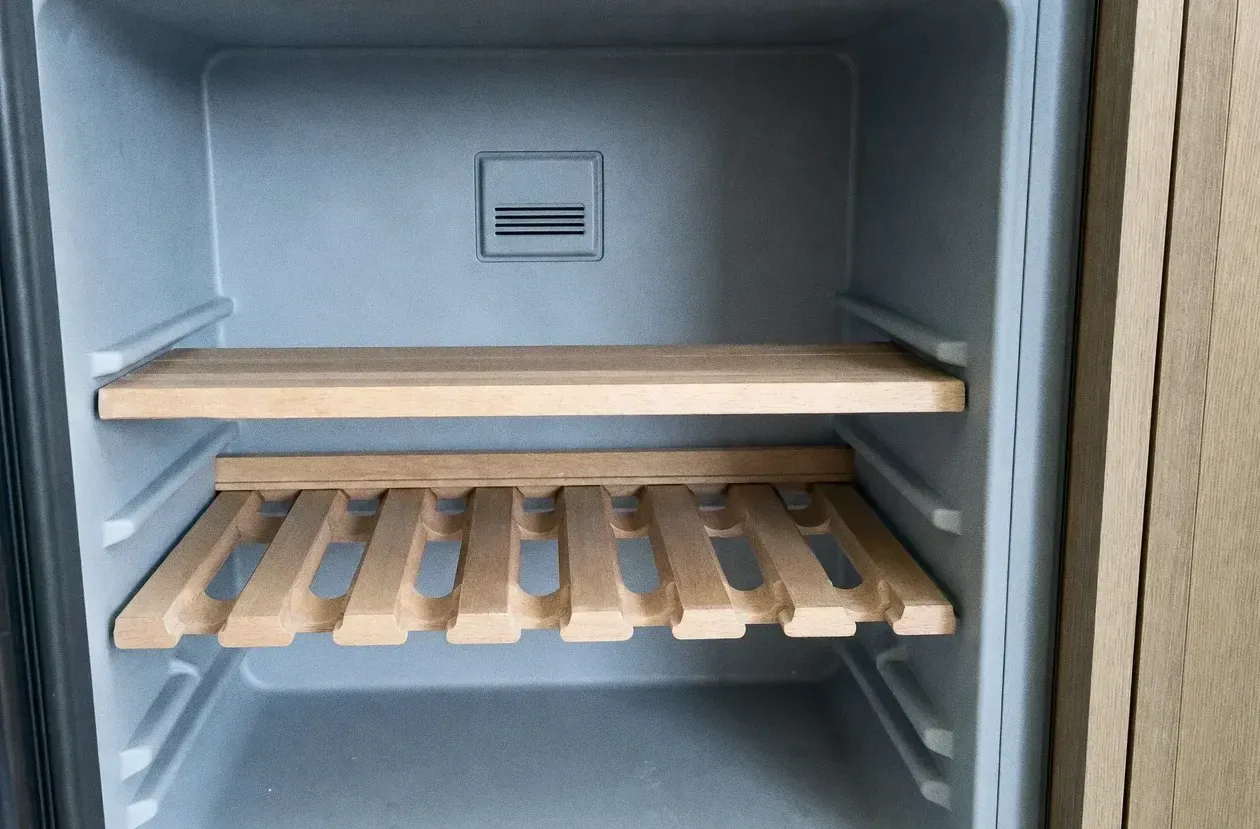
Usually, yes. On a built-in refrigerator or freezer column, a compressor or sealed-system repair typically runs $1,000–$2,080, while a comparable new built-in costs $7,990–$21,170 for the appliance alone. Even at the top of the repair band, you spend roughly a quarter of the cheapest replacement. The catch is that the compressor has to be the real culprit. A freezer that has drifted from 0°F into the 20s may just as easily have a stalled fan, a failed sensor or a condenser buried in lint, and those cost far less to put right.
That matters most in a fitted kitchen, where the unit sits in an opening sized for it, often behind panels that match the cabinetry. Swapping it out is a far bigger project than wheeling a freestanding fridge out the back door.
What the compressor does in a fridge freezer
The compressor is the pump in a sealed refrigeration loop. It pulls in cool, low-pressure refrigerant vapor from the evaporator inside the cabinet, squeezes it into hot, high-pressure gas and sends it to the condenser, where a fan carries the heat out into the kitchen. The refrigerant turns back to liquid, passes a narrow restriction and boils again in the evaporator, soaking up heat from the food as it goes. Nothing in that loop is meant to be opened in normal service, which is why it is called the sealed system.
Many Sub-Zero units carry two loops. The Classic Series literature describes Dual Refrigeration as separate refrigerator and freezer systems, which keeps food odors out of the ice and frozen food and keeps the fresh side from being dried out. So a warm freezer next to a cold refrigerator section can mean the trouble is confined to the freezer’s own circuit. Newer models also use variable-speed compressors run by electronics, so a fault can sit in the drive wiring rather than the motor.
How compressors fail and what you will notice
Compressors fail in a few recognizable ways. Windings open or short, so the motor gets power and does nothing. Worn valves let the pump run without moving enough refrigerant. A seized motor tries to start, pulls heavy current and trips its overload. And on variable-speed systems, the electronics can lose contact with a compressor that is mechanically fine.
The symptoms follow from those failures:
- A click every few minutes from the machine compartment, a brief hum, then quiet: a compressor that cannot start.
- A steady hum and a freezer that never pulls down: weak pumping or a refrigerant leak.
- Frost on only part of the evaporator coil, a classic sign of a low charge.
- Silence from the compressor while the lights and display still work.
Heat speeds all of this up. A compressor shedding heat through a matted condenser runs longer and hotter, and a humid Boston summer kitchen gives it even less margin.
What looks like a dead compressor but is not
Before anyone prices a sealed-system job, the cheaper suspects have to be ruled out:
- Freezer evaporator fan. The compressor runs but no air moves inside the freezer. Classic models may show 35 F 33 or 35 F 34.
- Dirty condenser. Both sections creep warmer and the compressor rarely rests.
- Defrost heater, thermostat or sensor. Frost builds on the back wall and smothers the airflow.
- A failed thermistor. The control misreads the temperature and runs the system wrongly.
The condenser is the one you can handle. On a Classic (CL) unit it sits behind the flip-up grille; on a Designer (DET, DEC) unit it is behind the kickplate, which comes off with two screws. Power the unit down at its own control panel, put gloves on, and run a soft vacuum brush with the grain of the fins, never against it. The full routine is in our guide to cleaning freezer coils, and if frost keeps coming back, see why a Sub-Zero stops defrosting.
These lookalikes cost a fraction of a compressor. A fan motor typically runs $280–$590, a defrost heater, thermostat or sensor $290–$680, and a control board $470–$940, each confirmed by a firm quote after diagnosis.
What the display codes say about the compressor
Classic Series controls name compressor trouble outright. If you see 60 1 60, the control is reporting that it detected no load from the refrigerator compressor; 60 2 60 is the same report for the freezer. The pair 60 1 38 and 60 2 38 signals that the variable-speed compressor stopped communicating. A microcompressor pin stuck off or on shows as 95 1 00 or 95 1 01 on the refrigerator side, and as 95 2 00 or 95 2 01 on the freezer side. Sub-Zero’s routine is short: breaker off for 30 seconds, power back on, retest, and call for service if the code returns.
A code narrows the search but does not condemn the compressor, because a broken wire, a loose connector or a drive board can produce the same report. Note the code and both compartment temperatures, and give them when you call.
Why the repair is a technician’s job
Swapping a compressor means opening the sealed system: recovering refrigerant, cutting out the old unit, brazing in a new one with a fresh filter-drier, pulling a deep vacuum and weighing in an exact charge. Sub-Zero’s current guides add a safety reason. Because the refrigerant inside is flammable, the company limits work on it to refrigeration technicians qualified for that class of gas.
The quantities are small, too. Home refrigerators and freezers that run on R-600a, R-290 or R-441A are capped at 150 grams (5.29 ounces) per refrigerant circuit by UL 60335-2-24, the 2017 standard EPA adopted in 2018 in place of its earlier 57-gram limit. With that little gas in the loop, a few grams either way changes performance, so the charge goes in by scale weight, not guesswork.
Deciding whether to repair or replace
Once the fault is confirmed, the decision usually turns on the cabinet, not the compressor. Repair is the sensible call when the liners, doors, hinges and controls are sound and the unit has otherwise been dependable. Replacement deserves a look if the cabinet is rusting, the liner is cracked, several systems are failing together, or the sealed system has been opened before. A tired door seal is no reason to retire a unit; a gasket typically runs $270–$760.
Sub-Zero Repair New England is an independent service. Our $95 visit covers the trip and the full diagnostic work, and that fee comes off the repair bill if you go ahead; the firm price is agreed before any work starts. For Sub-Zero refrigerator repair in Medford, Davis Square, Arlington Heights or Ashmont, call (781) 371-8990.
Still asked on the phone
Can I replace a freezer compressor myself?
No, this is not a homeowner repair. It means opening the sealed system, recovering and weighing refrigerant and brazing new joints, and current Sub-Zero guides say only technicians qualified for flammable refrigerant may work on the equipment. Your useful steps are cleaning the condenser, resetting the breaker once and writing down any code.
Why is my freezer warm when the refrigerator side is still cold?
On Sub-Zero models with Dual Refrigeration the freezer has its own cooling system, so one side can fail while the other keeps working. The freezer compressor is one possibility, but a stalled evaporator fan, a defrost fault or an iced-over coil produce the same symptom and are checked first.
How much does a compressor repair cost compared with a new built-in?
A compressor or sealed-system repair typically runs $1,000–$2,080, against $7,990–$21,170 for a comparable built-in refrigerator, appliance only. The exact figure comes as a firm quote after diagnosis, and the $95 visit fee is credited toward the repair if you approve it.
Will resetting the breaker clear a compressor error code?
Sometimes, when the fault was a passing electronic glitch. For Classic Series codes such as 95 2 00, Sub-Zero says to cut power at the breaker for 30 seconds, restore it and retest, then book service if the code reappears. Resetting over and over will not cure a real fault.
What should I do with the food while I wait for the repair?
Keep the doors shut as much as you can and move the most valuable items to a cooler packed with ice or to a second freezer. A closed, well-stocked freezer holds its cold far longer than a half-empty one that is opened every hour.